Nursery bedding · A practical guide
Nursery Bedding Guide: Flat or Fitted Organic Cotton Protection?
In a nursery, the smallest choices are often the ones that shape the daily routine. A crib pad can add a washable layer beneath the sheet, but its design matters: a flat pad lies on the mattress, while a fitted version is made to stay in place with elastic. Understanding that distinction—and checking the instructions for your particular mattress and pad—can make bedding changes simpler and more considered.
This guide compares flat and fitted organic cotton crib pads, explains what to check before use, and offers a thoughtful framework for choosing between them. It is general bedding information, not medical advice or a substitute for current safe-sleep guidance.
First, what does a crib pad do?
A crib pad is an additional bedding layer designed to sit on a mattress beneath a fitted crib sheet. Depending on its construction, it may provide a washable surface that helps protect the mattress from everyday moisture, spills, sweat, or stains. Some designs are also described as waterproof, but that feature should never be assumed: check the product specifications to understand exactly what the pad is intended to do.
It is useful to separate a pad’s practical role from its effect on the sleep surface. A pad is not automatically a mattress topper, a mattress protector, or a substitute for a fitted sheet. Nor should it be treated as a way to soften or reshape an infant mattress. The finished sleep surface must remain appropriate for the crib and mattress, and every layer should be used only as directed by its manufacturer.
For families preparing a nursery, the appeal is often straightforward: a removable layer can be easier to wash than the mattress itself. Organic cotton may also appeal to those who prefer natural fibres or want to understand the materials in close contact with bedding. Still, labels such as “organic,” “natural,” or “hypoallergenic” do not by themselves establish that a product is suitable for every crib, mattress, baby, or use case. Construction, fit, care instructions, and compatibility all deserve a place in the decision.
Flat versus fitted: the essential difference
The distinction is about how the pad sits on the mattress. A flat crib pad is a rectangular layer that rests on the mattress. A fitted crib pad has elastic—often around the perimeter—intended to help hold it on the mattress. Both may be designed to go beneath a fitted sheet, but they are not interchangeable in every detail. Use the particular product exactly as its instructions describe.
Flat crib pad
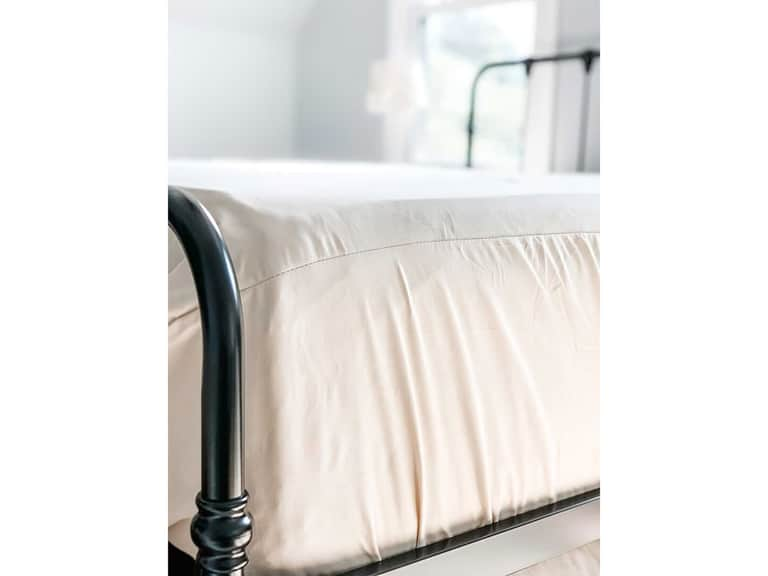
A flat style is laid across the mattress and positioned according to the product directions. Its simple shape can make it easy to fold, store, or lift away for washing. Because it does not have fitted sides, careful placement matters. Confirm the pad’s dimensions and the intended layering sequence, and check that it lies smooth and secure beneath the sheet as directed.
Fitted crib pad
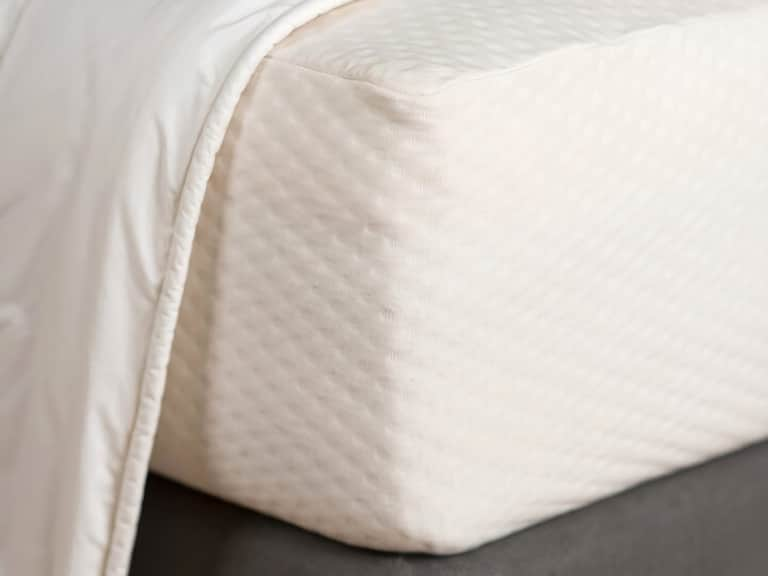
A fitted style uses elastic to wrap or hold the pad on the mattress. That construction may make installation feel more familiar to anyone accustomed to fitted sheets. It still needs to match the mattress dimensions and depth, and it must sit smoothly without bunching, riding up, or interfering with the fitted sheet. Elastic is a design feature, not a guarantee of compatibility.
In short, the flat design is positioned on the mattress, while the fitted design is made to stay on it with elastic. The more important question is not which style sounds inherently superior, but which product is explicitly intended for your mattress and bedding arrangement—and whether you can keep the resulting surface smooth and secure.
Two Naturepedic styles, two constructions
Naturepedic offers a flat and a fitted organic cotton crib mattress pad in the product information available for this guide. Both are described as using organic cotton flannel on top, organic cotton muslin on the bottom, and a thin waterproof layer between the two cotton layers. The descriptions identify a crib-size dimension of 28 by 52 inches. The key difference is how each is designed to sit on the mattress.
The Naturepedic Waterproof Organic Cotton Crib Mattress Pad, Flat is described as a flat moisture pad that layers between the mattress and fitted sheet. Its construction is intended to create a waterproof surface, and the product information says it can help protect the mattress from liquid. The brand description also notes that it is machine washable and dryer safe; consult the product’s current care label for the exact settings before laundering.
The Naturepedic Waterproof Organic Cotton Crib Mattress Pad, Fitted is described as having elastic all the way around for a snug fit. Like the flat option, its listed construction includes a cotton flannel top, cotton muslin bottom, and an inner waterproof layer. The product information also lists machine washing and drying, while noting a shipping timeframe. Confirm current availability, specifications, and care guidance with the retailer before ordering.
Both descriptions specify that the products do not include vinyl or PVC, phthalates, latex, wool, or chemical flame retardants. Such details can help readers compare materials, but they should be read as product specifications, not as a promise of a particular health outcome. If a baby has a diagnosed allergy or sensitivity, ask an appropriate health professional about individual concerns and verify the current label and manufacturer information.
How to choose: begin with the mattress, not the aesthetic
Nursery bedding is easy to approach as a styling exercise: a considered palette, crisp cotton, a neatly dressed crib. But for a crib pad, the first checks are practical. Start with the crib and mattress manufacturers’ instructions, then compare the pad’s size and intended use with the specific mattress. A listed measurement alone is not enough if the mattress has an unusual shape, thickness, or construction.
- Measure the mattress. Check its length, width, and depth, then compare those figures with the pad’s stated dimensions and fit guidance.
- Read the crib and mattress guidance. Follow the instructions supplied with both, including any directions about additional layers or compatible accessories.
- Confirm the order of layers. If the pad is intended to sit beneath a fitted sheet, use it in that arrangement—not on top of the sheet or in another configuration unless the manufacturer specifically says so.
- Inspect the finished surface. Check that the pad and sheet lie flat, that fabric is not bunched, and that the sheet remains securely fitted.
- Review care requirements. A pad that can be washed in a way that suits your household may be more practical than one that requires specialist care.
- Check the current product label. Construction, certifications, care details, and availability can change; verify the information supplied with the item you receive.
A fitted design may appeal if you want the pad itself to be held in place by elastic. A flat design may suit a household that prefers a simple rectangular layer and is comfortable positioning it exactly as directed. Neither preference overrides the need for correct sizing, secure bedding, or compatibility with the mattress.
Organic cotton: what the wording can—and cannot—tell you
“Organic cotton” describes a material and, where supported by a relevant certification, a set of standards associated with how the fibre or textile is produced and processed. It is not a shorthand for every feature a shopper might hope for. It does not automatically mean that an item is waterproof, especially breathable, easier to clean, or suitable for every child. Those attributes depend on the complete construction and should be confirmed in the product details.
The Naturepedic crib pad descriptions identify organic cotton in the fabric layers and describe a thin waterproof layer between them. That combination can be relevant to someone seeking a cotton-faced pad with stated moisture protection. Look for clear information about the materials and construction, rather than relying only on broad marketing language. If certification is important to you, confirm which certification applies to the specific item and what it covers.
It is equally sensible to think about feel and routine. Cotton flannel is commonly chosen for its soft, brushed surface, while muslin has a different weave and hand. Once covered by a fitted sheet, the pad itself is not the visible finish of the crib; its value is chiefly functional. A simple, washable layer that fits the mattress and follows its instructions may be more useful than selecting on appearance alone.
Fit is a matter of dimensions—and a smooth finish
Even a well-made pad can be frustrating if it does not suit the mattress. If it is too small, it may not cover the intended area. If it is too large, it may fold or gather. A fitted design must also accommodate the mattress depth and shape; the fact that it has elastic does not mean it will fit every crib mattress. Take time to confirm compatibility before use rather than trying to force a mismatched layer into place.
For a flat pad, placement is especially important. Follow the product’s directions for how it lies on the mattress, and ensure the fitted sheet can be secured in the manner intended by the crib and mattress manufacturers. For a fitted pad, stretch the elastic into position as instructed and check all around the mattress. In either case, inspect the bed after making it and again if bedding has shifted.
Some families find it useful to keep a spare fitted sheet or pad available for laundry days. That is a household convenience, not a reason to layer extra items in the crib. Keep the arrangement simple and follow current safe-sleep recommendations for the baby’s age and setting.
Washing and care: keep the instructions close
A washable layer is only useful if its care routine is manageable and the item is laundered as directed. Before the first use, read the product label and any instructions supplied by the manufacturer. Do not assume that two pads with similar cotton surfaces can be washed in the same way: the waterproof membrane, stitching, elastic, and finishing may differ.
The Naturepedic product descriptions presented here list machine washing and drying for both crib pad styles. Treat those details as a starting point and verify the actual label for water temperature, cycle, detergent guidance, and dryer settings. Avoid substituting a harsher method simply to speed up drying. Heat, bleach, or unsuitable products can affect fabrics and waterproof layers, and the care label is the appropriate authority for that particular item.
After laundering, inspect the pad for changes in shape, loose stitching, damaged elastic, or signs that the waterproof layer has deteriorated. Replace an item if it no longer fits securely or appears damaged. Regular checks are a quiet but worthwhile part of nursery upkeep, just as checking that the fitted sheet remains in good condition is.
Safe-sleep guidance comes before added comfort
For an infant’s sleep space, bedding choices should be guided by current advice from recognised public-health authorities and by the crib and mattress manufacturers’ instructions. Safe-sleep recommendations can vary by jurisdiction and may be updated, so consult current guidance where you live. In the UK, parents and carers can refer to the NHS and The Lullaby Trust for up-to-date information on safer sleep.
A crib pad should not be used to soften an infant mattress, create a pillow-like surface, or alter the crib’s intended sleeping area. Do not add a layer unless it is suitable for the specific mattress and used exactly as directed. Keep the sleep space free of loose bedding and other items that current safe-sleep guidance advises against. If you are uncertain whether a product is appropriate, check with the crib and mattress manufacturers or seek advice from a qualified health professional.
Product language such as “breathable,” “natural,” or “waterproof” should not be taken as a substitute for safe-sleep guidance. Those words describe particular materials or performance claims; they do not establish that a product makes a sleep space safer or prevents harm. Read the actual instructions, use the item only for its stated purpose, and keep the overall sleep setup simple.
A concise comparison
| Consideration | Flat crib pad | Fitted crib pad |
|---|---|---|
| How it sits | Laid on the mattress as directed | Uses elastic to hold it on the mattress |
| What to verify | Dimensions, placement, and a smooth surface beneath the sheet | Dimensions, mattress depth, elastic fit, and a smooth surface beneath the sheet |
| Care | Follow the individual product label | Follow the individual product label |
| Best first step | Check the crib and mattress guidance, then confirm that the product is intended for your setup. | |
This comparison is deliberately simple: the construction explains the main difference, but it does not decide suitability on its own. A pad’s stated dimensions, materials, care requirements, and approved use are just as important as whether it is flat or fitted.
Questions parents commonly ask
Does a flat crib pad go under the fitted sheet?
For the Naturepedic flat style described here, the product information says it layers between the mattress and fitted sheet. Always check the instructions for the exact item you have and follow the crib and mattress manufacturers’ guidance.
Is a fitted crib pad automatically the better choice?
No. Elastic may help hold a pad in position, but the product still has to fit the mattress properly and be appropriate for the crib. Choose by compatibility and instructions, not by the assumption that one construction is universally preferable.
Are both Naturepedic pads described as waterproof?
Yes. The supplied product descriptions identify an inner waterproof layer in both the flat and fitted styles. Confirm the current specification and care label for the individual product you purchase.
Can I use two pads together for extra protection?
Do not add layers unless the crib, mattress, and product manufacturers specifically indicate that the arrangement is suitable. Extra layers can change how bedding fits and sits. When in doubt, keep the setup simple and consult current safe-sleep guidance.
How often should a crib pad be washed?
Follow the care instructions for the particular product and wash it when needed. The right routine depends on use, the care label, and your household’s circumstances. After washing, check that the pad still fits and is in good condition before using it again.
The considered choice
Choosing nursery bedding is less about assembling the most elaborate set and more about understanding what each layer does. A flat organic cotton crib pad offers a simple form that is positioned on the mattress; a fitted organic cotton crib pad uses elastic to help it stay in place. The Naturepedic styles described in this guide share a cotton-based construction and a stated waterproof inner layer, yet their method of fit is different.
Let the mattress dimensions and manufacturer guidance lead. Check the pad’s intended placement, keep the surface smooth, follow its care label, and refer to current safe-sleep advice before setting up an infant’s crib. With those details settled, the decision can be refreshingly practical: choose the style that is compatible with your mattress, suits your laundry routine, and can be used exactly as intended.