Bedding · Materials · Buying guide
Vispring Bedding Layers: How Wool-Filled Protection Differs
A mattress protector can be more than a discreet barrier between sheet and mattress. In Vispring’s Lux Skirted Mattress Protector, a cotton outer and British wool filling bring natural insulation and gentle cushioning to a fitted layer designed to stay in place. Understanding how that combination differs from cotton-only and synthetic alternatives makes it easier to choose a layer that suits your mattress, your routines and the way you sleep.
Published 18 October 2026
A bedding layer with a distinct purpose
The words protector and pad are often used interchangeably, but they do not always describe the same thing. A protector commonly prioritises a barrier against everyday wear, perspiration, dust and accidental spills. A pad may put more emphasis on cushioning, surface feel or temperature management. Many products combine several of these functions, so a label alone is not enough: construction and care details tell the fuller story.
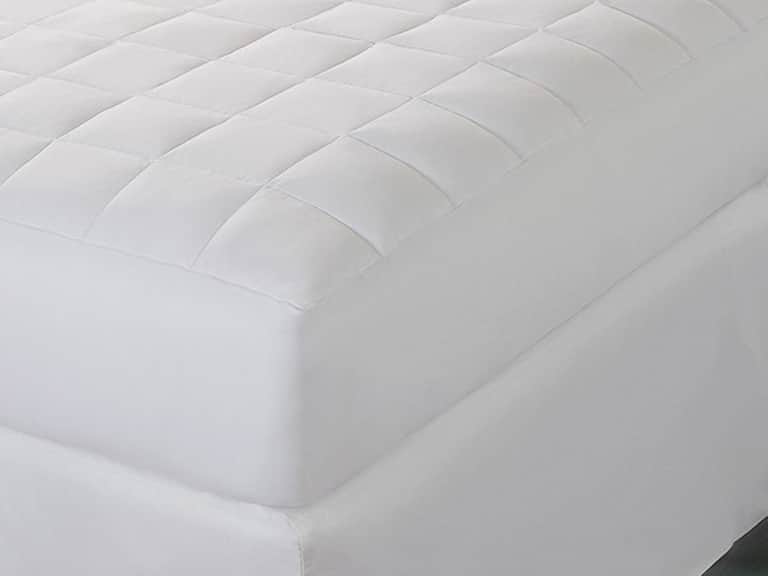
Vispring’s Lux Skirted Mattress Protector sits in that overlap. Its cotton outer provides the fabric surface, while British wool is used as the filling. The result is a washable, softly quilted layer intended to cover the mattress, add a little comfort and help shield it from ordinary use. A fitted pocket and fully elasticated skirt are designed to hold the protector securely on the bed.
That combination gives the piece a different character from a thin, smooth cover or a deeply padded topper. It is a protective bedding layer first, with the natural fibres contributing to the feel and performance. It should not be assumed to replace a waterproof barrier unless the product specifications explicitly say it is waterproof. For liquid protection, check the maker’s stated performance rather than relying on the word “protector.”
What wool brings to the bed
Wool is valued in bedding for its insulating and moisture-managing qualities. It can help moderate the small changes in warmth and humidity that occur around the body during sleep. Its role is not simply to make a bed warmer: depending on the construction and the sleeper, wool can create a more balanced-feeling layer by absorbing some moisture vapour and releasing it into the surrounding air.
In practical terms, this may appeal to someone who wants a naturally filled layer with a little softness but does not want the sensation of a thick, enveloping foam pad. Wool’s spring and loft differ from the slow, contouring feel associated with memory foam, and its surface is not necessarily as smooth or crisp as a tightly woven cotton cover without padding. The effect depends on filling weight, quilting, cover fabric and how the mattress beneath already feels.
Natural fibres are not a guarantee of a particular sleep temperature, nor do they make a product suitable for every person. Room temperature, duvet weight, mattress construction, individual comfort preferences and the rest of the bedding all matter. A wool-filled protector may be worth considering for someone seeking a breathable, softly cushioned layer, but it cannot promise to resolve overheating or other sleep concerns on its own.
British wool identifies the stated origin of the filling, not an automatic certification of every environmental or animal-welfare claim a shopper might value. Anyone comparing sourcing or standards should look for clear documentation and named certifications, and distinguish those verified details from broad descriptions such as “natural” or “conscious.”
Cotton cover, wool filling: why the pairing matters
The cover and the filling each have a job. Cotton forms the outer textile that touches the sheet and contains the filling. Wool supplies the interior loft and insulation. A quilted construction joins the layers and helps keep the filling distributed across the surface. If the quilting is uneven, the pad can feel inconsistent; if the whole piece is too bulky for the bed, it may affect the way a fitted sheet sits.
Compared with a cotton-only protector, a wool-filled design generally introduces more loft and a more noticeably padded hand. A cotton-only layer can be a better choice when the priority is a minimal change to the mattress feel, straightforward layering or a lighter textile surface. Cotton itself can absorb moisture and feel familiar against the skin, but the experience varies significantly between a plain stretch-knit cover, a quilted cotton pad and a cotton fabric backed by a waterproof membrane.
Compared with synthetic-filled padding, wool offers a different fibre profile and may suit shoppers specifically seeking natural filling. Synthetic alternatives can be useful where a lower-maintenance or more readily machine-washable option is the priority; however, their warmth, loft, breathability and longevity vary by design. It is more useful to compare published construction and care details than to assume that either natural or synthetic is universally superior.
For a point of comparison, the Arcadia Mattress Pad uses a pluma-fil down-alternative fill within a cotton sateen shell and has a six-inch sewn-through box construction, with elasticised sides for mattresses up to 17 inches deep. It represents a different approach to cushioning: a loft-focused synthetic alternative rather than a wool-filled protector. These are not identical products, and the comparison is useful chiefly for understanding how filling, quilting and fit can shape a bedding layer’s purpose.
Fit is part of comfort
A protector that shifts, bunches or pulls at the corners can undermine an otherwise well-made bed. Vispring’s fitted construction is intended to keep the layer in position, with an elasticated skirt and a stated pocket depth of 13.75 inches. Before choosing any fitted pad, measure the mattress from its base to its highest point, including any built-in pillow-top or quilting. The mattress’s nominal size is only one part of the fit question.
Also consider whether a mattress topper is already in use. The protector needs to accommodate the full height of the mattress and any layer it is expected to cover. A pocket that is too shallow may strain the seams or ride up; an excessively deep pocket may leave surplus fabric that is harder to smooth beneath the sheet. Check the manufacturer’s sizing guidance for the exact bed size and mattress depth rather than assuming that a “king” or “super king” label guarantees compatibility.
Fit can be especially important on adjustable beds, split configurations and mattresses with unusually deep comfort layers. Confirm whether the product is intended for that type of base and whether movement could affect how securely it stays in place. A snug fit should not mean forcing the skirt over a mattress beyond its stated capacity.
Flat protectors offer another option. They can be simpler to lift off and reposition, but may need more attention to remain smooth beneath the sheet. Fitted designs usually have the advantage of elasticated retention; flat designs may suit a particular layering system or mattress profile. Neither construction is automatically better in every bedroom.
Care: the detail that changes the decision
Wool’s natural appeal should be weighed against its care requirements. The Vispring Lux Skirted Mattress Protector is described as washable, with guidance to machine wash monthly on a gentle, cold-water cycle with similar colours and a natural detergent. The care instructions advise against bleach and whiteners, recommend line drying or low tumble drying, and caution against fabric softeners and dryer sheets because they can reduce cotton’s absorbency.
Follow the label supplied with the particular item: care instructions can change, and the product label is the most relevant guidance for the piece in hand. Avoid assuming that every wool-filled protector can be machine washed simply because some can. Wool constructions differ, and heat, vigorous agitation, unsuitable detergent or over-drying may affect the fibres, quilting or fit.
Monthly washing is the product guidance for this particular protector, not a universal rule for every mattress layer. Frequency can depend on use, household needs and the maker’s instructions. A removable protector may help reduce the amount of cleaning required for the mattress itself, but it is still sensible to air the bed and wash bedding on a routine suited to the household.
Consider practicalities before buying: Is there enough space to wash and dry a large bed-size item? Does the care label allow the method available at home? Would a product requiring specialist cleaning be inconvenient? A material that feels appealing in a product description may be less suitable if its maintenance does not fit everyday life.
Protection, waterproofing and allergies
Wool-filled protection should not be confused with waterproof protection. The Vispring description highlights a washable, quilted barrier against everyday spills, stains, body oils and perspiration, but it does not specify a waterproof membrane. If safeguarding a mattress against urine, drinks or other liquids is essential, look for an explicit waterproof claim and check what layer creates that barrier. Some waterproof constructions use a membrane that can alter stretch, sound or airflow; product details should explain the design.
Likewise, “natural” and “hypoallergenic” are not interchangeable terms. A natural fibre does not guarantee that no sleeper will react to it, and people with known wool or textile sensitivities should check the exact materials and consult appropriate professional advice if uncertain. Dust-mite management is a separate question from fibre choice. A tightly fitted, regularly laundered cover may form part of a household’s approach, but product claims should be read carefully and should not be treated as medical advice.
For a child’s bed, check that the product is specifically suitable for the age group and sleep setting, follows the mattress and bedding guidance relevant to that setting, and fits securely. Do not infer infant-sleep suitability from an adult protector’s natural materials or from a general description of comfort and protection.
How it compares with common alternatives
| Layer type | Typical emphasis | What to check |
|---|---|---|
| Wool-filled protector | Natural filling, gentle loft and moisture management | Wool sourcing, quilting, mattress depth and washing method |
| Cotton-only cover or pad | A familiar textile surface, with minimal or moderate cushioning | Whether it is quilted, stretch-knit, washable or waterproof |
| Synthetic-filled pad | Added loft and cushioning, often with practical care options | Fill type, distribution, heat retention and laundering guidance |
| Waterproof protector | Barrier against liquid reaching the mattress | Membrane construction, noise, breathability and fit |
The table describes broad tendencies, not guarantees. A thin wool layer may feel less cushioned than a lofty synthetic pad; a breathable cotton product may still include a waterproof backing; and a waterproof protector may also have a soft quilted top. Read the complete specification, especially where the product name makes a broad promise that the detailed construction does not clarify.
A considered checklist before buying
- Define the job. Decide whether the priority is a little more cushioning, a washable textile barrier, liquid protection or a combination.
- Identify the feel you want. A wool-filled layer has a different loft and response from a flat cotton cover or a plush alternative fill.
- Measure the mattress. Record its width, length and full depth, including any topper or integrated pillow-top.
- Check the fit construction. Confirm pocket depth, skirt design and compatibility with your bed type.
- Read the care label. Compare washing, drying and detergent requirements with what is practical at home.
- Verify performance claims. Look for explicit statements about waterproofing, certifications and sourcing rather than inferring them.
- Think about the whole bed. Consider the mattress, sheets, duvet and room climate together; no single layer determines sleep comfort.
For a luxury mattress, preservation of its surface and feel may be central. A fitted cotton-and-wool protector can offer a more substantial, natural-fibre layer than a very thin cover, but it will also introduce some padding between the sleeper and mattress. If retaining the mattress’s original feel is the priority, compare thickness and construction closely. If a softer surface is welcome, consider whether the wool layer’s loft is likely to complement, rather than overwhelm, the bed.
The quiet luxury of a well-chosen layer
The appeal of Vispring’s wool-filled bedding layer lies in its considered combination: cotton on the outside, British wool within, and a fitted construction intended to sit securely over the mattress. It offers a different proposition from a plain cotton cover, a waterproof membrane or a generously lofted synthetic pad. Its strengths are most relevant to shoppers who value natural filling, gentle cushioning and a clear care routine.
The choice is ultimately less about declaring one fibre superior than about matching a layer to its purpose. Measure carefully, distinguish moisture management from waterproofing, and make the care instructions part of the decision rather than an afterthought. When materials, fit and maintenance are in harmony, the result is a bed that feels thoughtfully finished: comfortable, protected and tailored to the habits of the household.
Frequently asked questions
Is a wool-filled mattress protector warmer than a cotton-only cover?
It may feel more insulating because wool adds a filled layer, while a simple cotton cover may add little loft. The actual experience depends on filling weight, quilting, room conditions and the rest of the bedding. Wool’s moisture-management qualities do not mean every sleeper will feel cooler or warmer.
Is the Vispring Lux Skirted Mattress Protector waterproof?
The product details describe cotton outer fabric, British wool filling and a washable, quilted protective layer, but do not specify waterproofing. If liquid resistance is essential, confirm the product’s current specification before purchase and choose a design explicitly described as waterproof.
How often should a wool-filled protector be washed?
Vispring’s stated guidance for this protector recommends monthly washing on a gentle, cold cycle, with line drying or low tumble drying. Follow the care label supplied with the product, since washing guidance differs between wool-filled bedding items.
Will a 13.75-inch pocket fit my mattress?
It depends on the mattress’s full depth and whether you need the skirt to cover a topper as well. Measure from the base to the highest point and compare that measurement with the maker’s fit guidance. Do not force a fitted protector onto a deeper mattress than its stated capacity.
Does natural wool make a protector hypoallergenic?
No. Natural materials do not guarantee that a product will suit every person, and “hypoallergenic” should not be assumed unless a claim is clearly supported. Check the complete material information if you have a known sensitivity, and seek appropriate advice for health-related concerns.